
When moving into a new season, one of the best things to do is read a book that will help you “reframe” your mindset. Every marketing season is different but is built upon the one that preceded it. When we fail to reframe, we set ourselves up for greater resistance mostly because our mindset is fixed. This book about what mentally strong people do should help to recalibrate and refresh our business perspective.
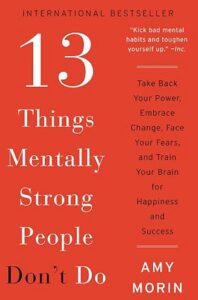
13 Things Mentally Strong People Don’t Do
by Amy Morin
“13 Things Mentally Strong People Don’t Do” by Amy Morin (2014) is a self-help book written by a psychotherapist who developed her framework partly from her own experiences with grief and loss (she lost her mother, husband, and father-in-law within a few years of each other). The book reframes mental strength not as suppressing emotion or “toughing it out,” but as a set of habits people actively avoid.
The core idea: Mental strength = physical strength — you build it by identifying and eliminating unhealthy habits, not just by adding positive ones. Morin argues most self-help focuses on what to do; she focuses on what to stop doing.
The 13 things mentally strong people don’t do:
- Waste time feeling sorry for themselves — self-pity is self-defeating; gratitude is the antidote.
- Give away their power — they don’t let others control how they think, feel, or act.
- Shy away from change — they welcome challenge and calculated risk-taking.
- Waste energy on things they can’t control — they focus effort where it actually matters.
- Worry about pleasing everyone — they’re willing to say no and set boundaries.
- Fear taking calculated risks — they weigh risks rationally rather than avoiding them out of fear.
- Dwell on the past — they learn from it instead of ruminating.
- Make the same mistakes over again — they take responsibility and adjust behavior.
- Resent other people’s success — they don’t see life as zero-sum; they can be happy for others.
- Give up after failure — they view failure as a chance to grow, not a reason to quit.
- Fear alone time — they’re comfortable with solitude and self-reflection.
- Feel the world owes them anything — they don’t operate from entitlement; they earn what they get.
- Expect immediate results — they understand real change takes sustained effort over time.
Structure: Each chapter follows a pattern — a case study/vignette, why the habit is harmful, what to do instead, and practical exercises for building the corresponding strength, plus warning signs of overcorrecting (e.g., confidence vs. arrogance).
Overall takeaway: Mental strength is a practice, not a personality trait — it’s built through consistent, small choices to regulate thoughts, manage emotions, and act productively despite circumstances.