
A major land preservation decision in Monmouth County may signal something larger taking place across New Jersey communities: residents are increasingly asking what kind of development truly serves the long-term interests of their towns.
Last week, the Monmouth County Board of Commissioners approved spending $27.75 million from the county’s Open Space Trust Fund to preserve a 115-acre historic farm property located in Upper Freehold and Robbinsville. The property, commonly referred to as the Stein Property, had previously been targeted for the construction of two warehouses totaling more than 450,000 square feet.
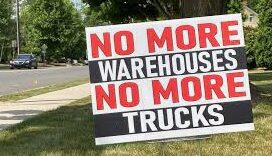
The proposed development generated years of public opposition from residents concerned about truck traffic, pollution, infrastructure strain, and the impact on the character of the surrounding community.
For many local homeowners, this was not simply a zoning dispute.
It was a broader conversation about quality of life, preservation, and the future identity of the area.
Residents in nearby Allentown argued that the warehouse project would have fundamentally altered a historically sensitive corridor already dealing with traffic pressures. Some homeowners expressed concerns about noise, diesel emissions, and the effect heavy truck traffic could have on older historic homes and aging foundations.
At the same time, local officials faced competing pressures.
Supporters of the warehouse proposal pointed to the potential tax revenue the project could generate for the township. Across New Jersey, municipalities continue grappling with how to balance economic development opportunities against increasing concerns over overdevelopment, congestion, and environmental impact.
What makes this particular preservation effort especially significant is the historical importance of the land itself.
According to county officials, the property played a role during the Revolutionary War. In June of 1778, just days before the pivotal Battle of Monmouth, approximately 10,000 British troops reportedly camped on the property as George Washington repositioned Continental forces toward Allentown.
With the nation approaching its 250th anniversary, preserving historically connected land has taken on added meaning for many communities throughout New Jersey.
County officials have discussed the possibility of eventually incorporating the preserved property into an expansion of Crosswicks Creek Park, potentially including walking trails, historical features, and community gathering spaces such as farmers markets.
The decision also reflects how organized local advocacy can shape real estate and development outcomes.
Thousands of residents signed petitions, attended planning board meetings, contacted elected officials, and remained engaged throughout a process that stretched several years. In an era when many residents feel disconnected from local decision-making, this effort demonstrated how community involvement can directly influence land use outcomes.
For buyers, sellers, developers, and property owners, the situation offers an important reminder that real estate is rarely just about buildings and transactions.
Land use decisions influence traffic patterns, property values, community identity, environmental conditions, and future development opportunities for decades.
At Counsellors Title Agency, we closely follow the evolving development landscape throughout New Jersey because these decisions often carry long-term implications for homeowners, municipalities, and future real estate activity. Whether involving preservation, redevelopment, zoning changes, or large-scale commercial projects, understanding the local dynamics behind a property can be just as important as understanding the transaction itself.
In many ways, Monmouth County’s decision reflects a larger question now being asked across New Jersey:
Not simply whether communities should grow — but how they want to grow.