
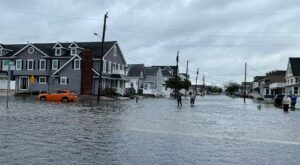
This is not the first nor’easter to stall on the east coast, but it is the first one to do so in September. There have been a total of four nor’easters that have had lasted three or more days.
When a nor’easter stops moving, it is typically due to an atmospheric blocking pattern (such as a Greenland block or a strong high-pressure system to its north). This traps the storm and forces it to sit in place, continuously pummeling the coast across multiple high-tide cycles. The most prominent historical examples of stalled nor’easters include:
1. The Ash Wednesday Storm (March 5–9, 1962) This is widely considered the ultimate example of a stalled, devastating nor’easter. An upper-level atmospheric block trapped a massive low-pressure system off the Mid-Atlantic coast. Instead of moving northeastward out to sea, the storm stayed virtually stationary for five straight days. Because it remained parked on the coast through five consecutive high tides, it caused some of the worst coastal flooding and beach erosion in U.S. history from North Carolina to New England.
2. The 100-Hour New England Snowstorm (February 24–28, 1969) This historic storm earned its nickname because it stalled directly off the New England coast and spun in place, dropping heavy snow relentlessly for more than four straight days. Areas like Mount Washington, New Hampshire, recorded a staggering 97.8 inches of snow from this single, stationary system.
3. The Blizzard of 1978 (February 5–7, 1978) While famous for its extreme snowfall totals, the sheer scale of destruction from this nor’easter was driven by its lack of movement. The storm stalled completely over the southern New England coast for nearly 36 hours. Because it sat motionless across two days of high-tide cycles, massive hurricane-force winds repeatedly drove water inland, destroying thousands of coastal homes.