
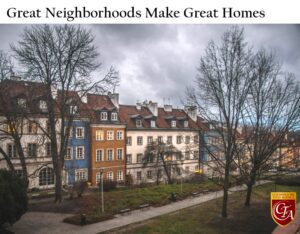
When people begin searching for a new home, they often focus on square footage, school districts, taxes, and commute times. Those are all important considerations, but another factor is quietly shaping the quality of life in communities across America: the disappearance of our gathering places.
Sociologists refer to these spaces as “third places”—the places we spend time outside of home and work. They include coffee shops, libraries, neighborhood diners, bowling alleys, recreation centers, museums, and local restaurants. These are the places where neighbors become friends, children create memories, and communities develop their identity.
Unfortunately, many of these places are disappearing.
According to the U.S. Bureau of Labor Statistics, America has lost nearly one-third of its bowling alleys and one-fifth of its movie theaters since 2001. More recently, researchers studying “third places” found that between 2019 and 2021, every major category of community gathering place experienced declines, with the greatest losses occurring in rural communities and underserved neighborhoods.
These changes matter because neighborhoods are more than collections of houses. They are ecosystems of relationships.
A favorite coffee shop, a local library, or a neighborhood restaurant often becomes the setting for conversations, celebrations, business meetings, and lifelong friendships. They provide the informal connections that make a community feel welcoming.
At Counsellors Title Agency, we’ve always believed that buying a home is about much more than purchasing property. It’s about becoming part of a community.
As you evaluate where to live, consider asking questions that go beyond the home itself:
* Are there places where neighbors naturally gather?
* Is there a vibrant downtown?
* Are there parks, libraries, or community centers nearby?
* Does the town encourage connection and civic engagement?
A house becomes a home more quickly when it’s surrounded by a healthy community.
In Part 2, we’ll look at why many of these gathering places are disappearing—and why supporting local businesses may be one of the best investments we can make in preserving the character of our neighborhoods.