
From Sandcastle to Bedrock: Leveraging New Jersey’s Own Assets
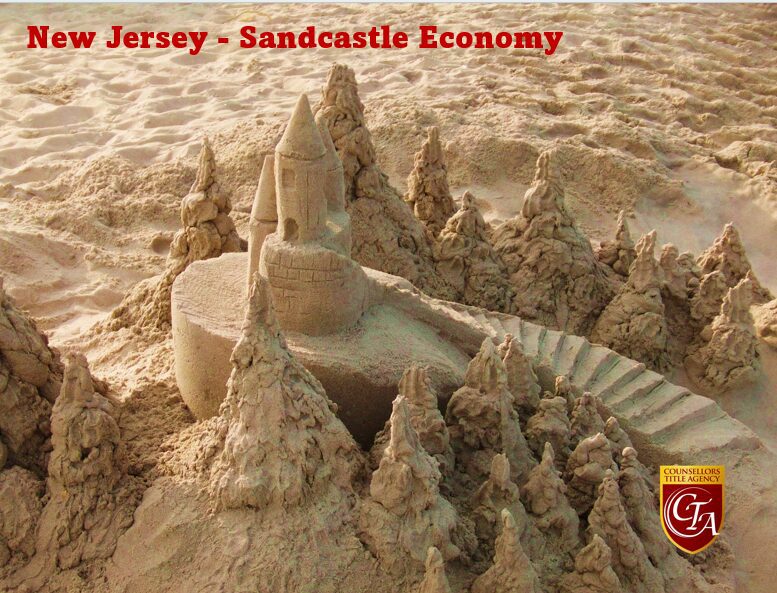
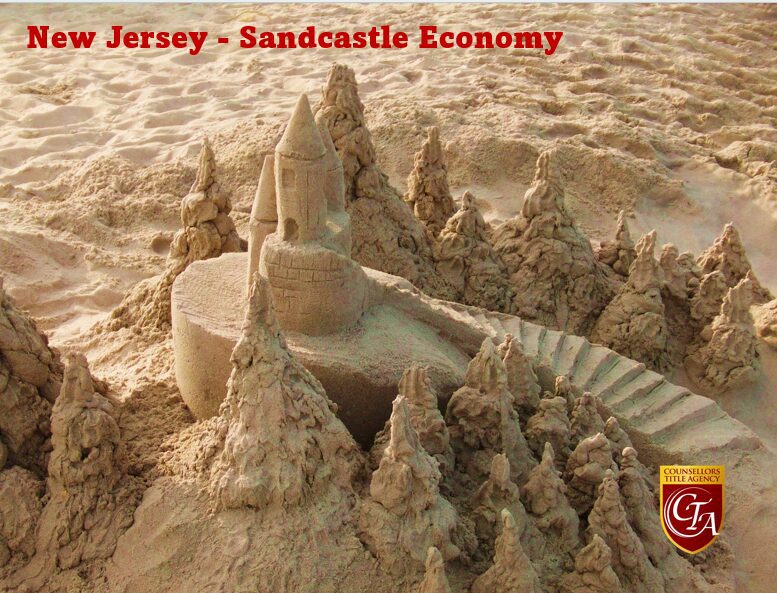
Like a sandcastle at high tide, New Jersey’s current fiscal foundation crumbles with each economic wave. But rebuilding requires more than just copying other states’ playbooks. Benchmarks from fiscally disciplined states like Utah and Texas can teach us sustainable governance, but New Jersey doesn’t have to abandon its identity to thrive. We already possess something these states don’t: strategic proximity to global economic powerhouses in finance, media, and technology—plus the embryonic stages of two transformative industries taking root right here at home.
1. The Netflix Studio Revolution in Monmouth County
Netflix’s massive production facility in Monmouth County represents far more than Hollywood’s eastward expansion—it’s the foundation stone for a completely reimagined Garden State economy. This isn’t merely a creative outpost; it’s an economic ecosystem generator with the potential to position New Jersey as the Northeast’s premier media hub, rivaling Atlanta’s remarkable transformation into the “Hollywood of the South.”
Film and television production operates as a force multiplier across dozens of industries. Every production functions as a temporary city, employing hundreds of specialists while contracting with an intricate web of local suppliers. Set construction drives demand for skilled carpenters, electricians, and engineers. Catering services create opportunities for local restaurants and food service companies. Transportation logistics require fleet management, equipment rental, and specialized hauling services. Post-production work demands software developers, sound engineers, and digital artists—high-paying technical roles that can anchor careers for decades.
The ripple effects extend far beyond direct employment. Equipment rental houses spring up to serve multiple productions. Specialized contractors emerge to handle everything from aerial cinematography to underwater filming. Hospitality services expand to accommodate visiting cast, crew, and executives. Real estate markets benefit from location scouts seeking authentic New Jersey backdrops, driving tourism and local spending.
But the true economic transformation happens when New Jersey becomes not just a production location, but a production headquarters. This means developing indigenous content companies, attracting streaming platforms to establish permanent operations, and creating the educational pipeline to supply the industry’s voracious appetite for talent. Rutgers, Princeton, and other state universities could develop specialized programs in digital media production, creating a direct pathway from New Jersey classrooms to Netflix sound stages.
2. The Artificial Intelligence Opportunity
Artificial intelligence is no longer a futuristic concept—it’s the new infrastructure layer of the global economy, as fundamental as electricity or telecommunications. New Jersey possesses unique advantages in this space that remain largely untapped, representing perhaps the greatest economic opportunity in the state’s modern history.
Educational Foundation: New Jersey’s world-class universities—Princeton, Rutgers, Stevens Institute of Technology—already conduct cutting-edge AI research. Princeton’s computer science program consistently ranks among the nation’s top five, while Rutgers has developed expertise in machine learning applications across multiple disciplines. These institutions represent ready-made incubators for AI innovation, but only if the state creates bridges between academic research and commercial application.
Data Infrastructure: New Jersey hosts some of the nation’s most sophisticated data centers, the physical backbone that makes AI computation possible. Companies like Digital Realty Trust and CoreSite operate massive facilities that could support AI workloads for the entire East Coast. This existing infrastructure provides a competitive advantage that states like Utah simply cannot match.
Talent Pool: The state’s proximity to New York’s financial district means thousands of quantitative analysts, data scientists, and software engineers already live in New Jersey communities. Many work remotely or commute to Manhattan for roles that could easily be performed at New Jersey-based AI companies—if those companies existed and were properly incentivized to relocate here.
Financial Sector Integration: Wall Street’s increasing reliance on algorithmic trading, risk modeling, and predictive analytics creates natural demand for AI services. New Jersey-based AI companies could serve this market without the overhead costs of Manhattan real estate, while offering shorter commutes for talent currently traveling to the city.
The opportunity requires coordinated action across multiple fronts. Startup incentives could attract AI entrepreneurs to establish operations in New Jersey rather than migrating to Silicon Valley or Boston. University partnerships could create technology transfer programs that commercialize academic research. Workforce development initiatives could retrain displaced workers from declining industries into AI-adjacent roles—data annotation, system monitoring, and technical support positions that don’t require advanced degrees but offer middle-class wages.
3. The Logistics and E-Commerce Advantage
New Jersey’s geographic position between New York and Philadelphia, combined with its port infrastructure and transportation networks, creates natural advantages in the rapidly expanding logistics and fulfillment economy. Amazon, UPS, and FedEx already operate major facilities in the state, but this represents only the beginning of what’s possible.
Last-Mile Delivery: As e-commerce continues displacing traditional retail, the demand for sophisticated logistics networks grows exponentially. New Jersey could become the distribution hub for the entire Northeast corridor, creating thousands of jobs in warehousing, transportation, and logistics management.
Cold Chain Storage: The state’s proximity to major population centers makes it ideal for specialized storage and distribution of pharmaceuticals, fresh foods, and other temperature-sensitive products. This niche requires skilled technicians, quality control specialists, and logistics coordinators—well-paying roles that don’t require four-year degrees.
The Infrastructure for Economic Transformation
Building a sustainable economic foundation requires more than hoping new industries will spontaneously emerge. It demands strategic public investment in the infrastructure that makes growth possible:
Fiber Optic Networks: Both media production and AI development require ultra-high-speed internet connectivity. Statewide fiber infrastructure could attract businesses while improving quality of life for residents working remotely.
Transportation Modernization: Efficient movement of people and goods becomes even more critical as new industries develop. Investment in rail, road, and port infrastructure pays dividends across multiple economic sectors.
Educational Alignment: Community colleges and technical schools must adapt their programs to supply the skilled workforce these emerging industries require. This isn’t just about computer programming—film production needs audio engineers, AI companies need data center technicians, and logistics requires supply chain analysts.
The Path Forward: Playing to Strength, Not Weakness
The fundamental challenge facing New Jersey isn’t that it lacks economic opportunities—it’s that current policies actively discourage the businesses and residents who could capitalize on those opportunities. While Neptune residents face $11,299 annual property tax bills, competitive states are attracting the same businesses and workers with reasonable tax structures and business-friendly policies.
But New Jersey doesn’t need to become Texas to succeed. It needs to become the best version of itself—a state that leverages its natural advantages while removing the policy barriers that wash away opportunity like waves destroying a sandcastle.
Strategic tax incentives for emerging industries can attract businesses without requiring broad-based tax increases. Regulatory streamlining can reduce the bureaucratic friction that drives companies to relocate. Infrastructure investment can create the foundation for sustained growth rather than short-term budget patches.
The opportunity exists to transform New Jersey from a high-tax, declining state into a high-value, growing economy. But it requires leadership willing to stop building policy sandcastles and start laying economic bedrock—the kind that can withstand both natural earthquakes and fiscal storms.